

How recurring invoices work
You set up a recurring invoice once, defining the client, line items, and a frequency. On each cycle, Heffl generates a draft invoice from that profile. You review the draft and send it yourself, so you stay in control of what goes out before the client receives it. This saves you from rebuilding identical invoices while keeping a final check on each one.Setting up a recurring invoice
- Go to Recurring Invoices in the sidebar
- Click + Recurring Invoice (or + Add Recurring Invoice)
- Fill in the setup:
- Template and Profile name (a label to identify this recurring profile)
- Frequency, how often it generates (see below)
- Start date and End date (leave the end date open for an ongoing profile)
- Due days, how many days after generation the invoice is due
- Client and Contact
- Sales person and an optional Project link
- Add line items with Qty, Rate, Discount, and Tax, exactly as on a normal invoice
- Save
Frequency options
The Frequency dropdown sets how often the invoice generates:- Custom
- Daily
- Weekly
- Every 2 weeks
- Monthly
- Every 3 months
- (and longer intervals)
What happens each cycle
On each scheduled date, Heffl generates a draft invoice from the profile, using the saved client, line items, and amounts. Because it is a draft, you review it and send it yourself rather than it going out automatically. The generated invoice then behaves like any other invoice, with its own status and payment tracking. See Invoices: creating, sending, and statuses.The recurring invoices list
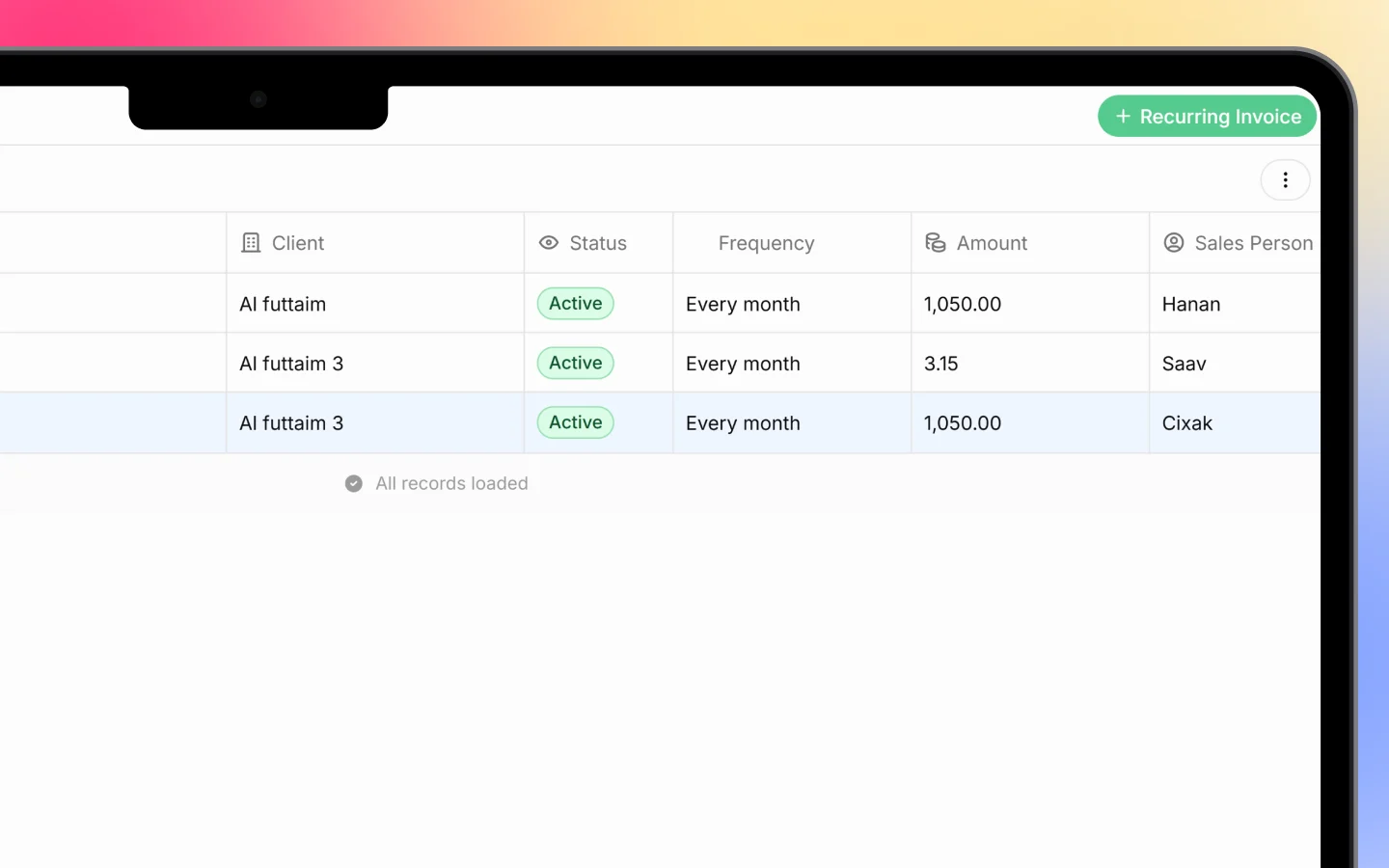
The list shows each recurring profile, one per row, with columns:- #, the profile number
- Name, the profile name you set
- Client
- Status (for example, Active)
- Frequency (such as Every month)
- Amount
- Sales Person
Managing a recurring invoice
Open a profile to edit its details, change its frequency, update line items, or adjust the start and end dates. To stop a profile generating new invoices, set an end date or change its status so it is no longer active. Existing invoices it has already generated are not affected.What to do next
- Review generated drafts under Invoices: creating, sending, and statuses before sending
- Payments: recording and collecting against them
- Link a profile to a Creating and managing projects for retainer-based work